
MEDICAL
MRI: A No-Fly Zone
MEDICAL
MRI: A No-Fly Zone
Precision in the magnetic field – myonic ball bearings for MRI-guided procedures
Image-guided procedures in MRI now open up possibilities that were unthinkable just a few years ago. Doctors can perform the procedure directly in the magnetic resonance imaging scanner and track the position and movement of the instruments used in real time. To ensure that this works safely, all instruments used must be consistently non-magnetic. Even components with the smallest ferromagnetic components can heat up, disrupting the image quality to such an extent that the procedure becomes difficult or they fly through the room like bullets.
This is particularly challenging for components that are hardly noticeable in everyday clinical practice but play a key technical role: ball bearings. They ensure precise, low-friction movement in catheters, guide frames, rotating instruments, and robotic assistance systems – and are supposed to remain “unnoticed” in MRI.
How is MR safety tested?
The FDA, the U.S. Food and Drug Administration, the US government regulatory agency and thus one of the most influential regulatory bodies for medical devices, pharmaceuticals, and food safety, bases its assessment of MR compatibility on internationally recognized testing methods (ASTM standards). Essentially, there are two questions:
- Is the component attracted by the magnetic field?
- Does it attempt to align itself or twist within the magnetic field?
The following sketches show in simplified form how these tests are carried out.
Determination of the deflection angle in MRI
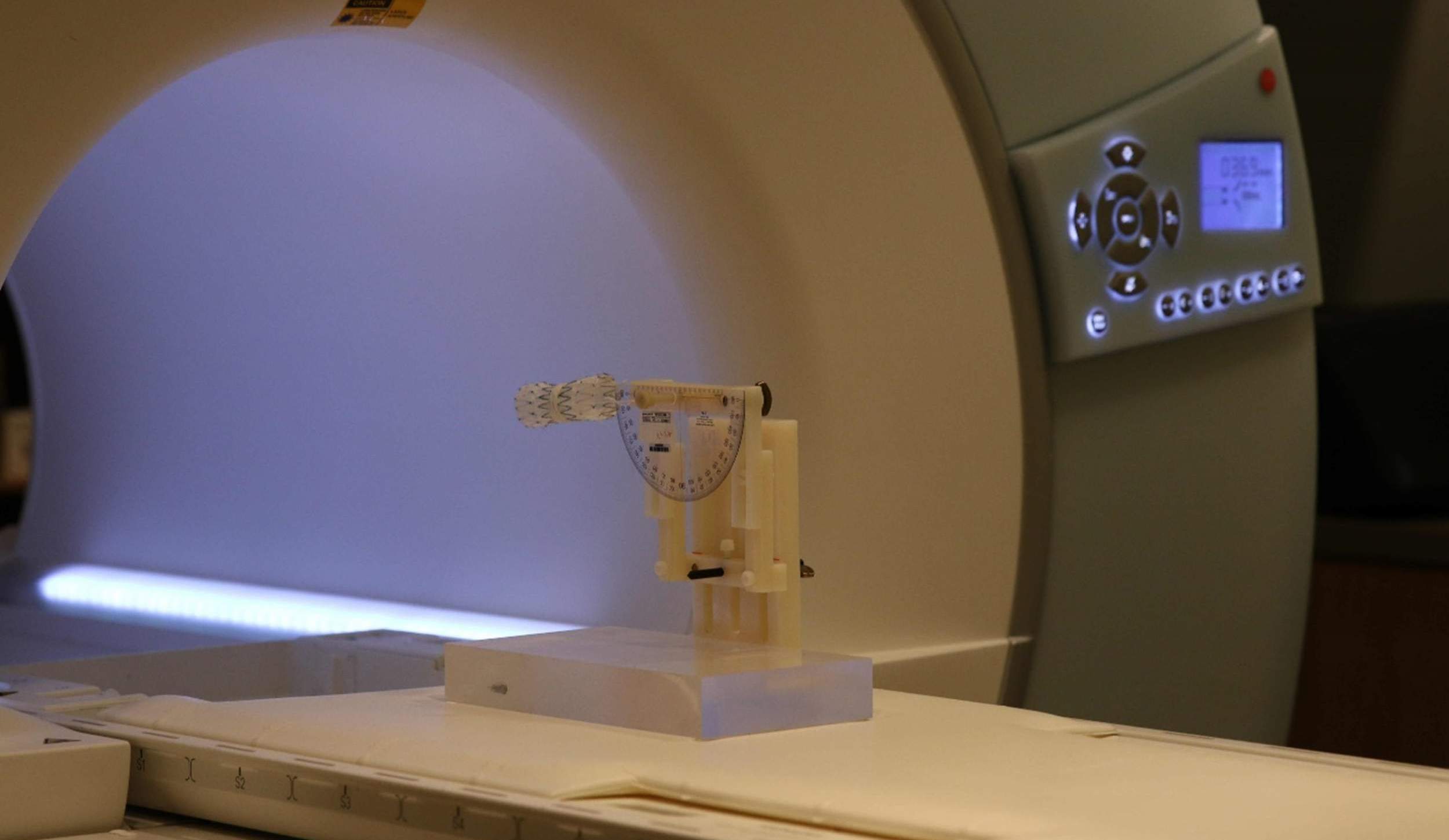
1. Determination of deflection angle (ASTM F2052)
A component is suspended from a thin thread or arm and positioned in the strongest field gradient of the MRI. When magnetic forces act on it, the component is deflected from the vertical. The resulting deflection angle is a direct measure of the magnetic attraction:
- small deflection angle → magnetic force is low
- large deflection angle → the component is clearly attracted by the magnetic field
As a practical rule of thumb:
If the deflection angle is less than 45°, the magnetic force is less than the weight of the component and is therefore generally acceptable. High-quality, non-magnetic components are significantly below this (e.g., 0–20°) and remain almost at rest in the magnetic field.
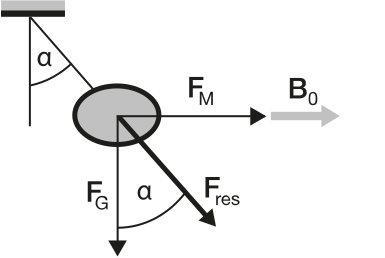
The sketch shows the test setup for measuring magnetic attraction.
2. Determination of torque (ASTM F2213)
The component is stored in such a way that it can rotate freely. It is then placed in the magnetic field:
- If the position remains stable, the torque is very low and the component behaves uncritically in the MRI.
- If it attempts to rotate noticeably or “snap” in a certain direction, this indicates ferromagnetic components. In this case, its use in MRI is severely restricted.
For safe use, it is crucial that no uncontrolled self-rotation is observed.
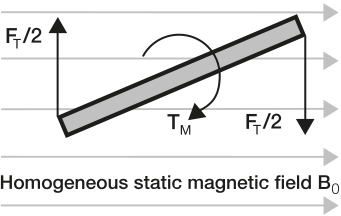
The second sketch shows how to check whether a component is attempting to align itself in the magnetic field.
3. Additional requirements
In addition, manufacturers must demonstrate that their components do not generate safety-related heating (ASTM F2182) and do not adversely affect imaging (ASTM F2119). These tests supplement the evaluation, but are usually secondary to the fundamental question of whether a component remains mechanically stable in the magnetic field and does not move unintentionally.
The combination of these tests enables the FDA to reliably assess whether a product can be used safely in MRI.
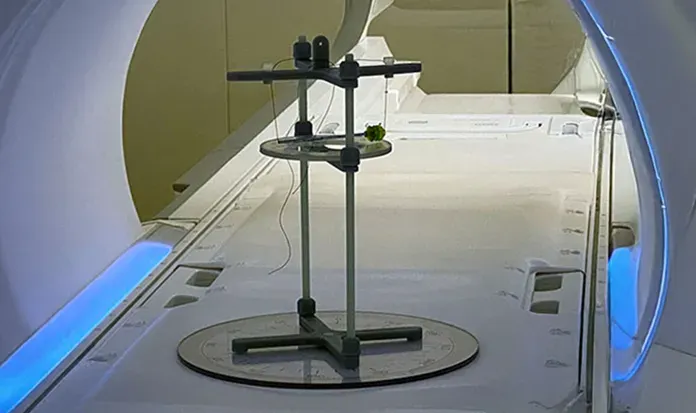
Determination of torque in MRI
4. Non-magnetic bearings from myonic
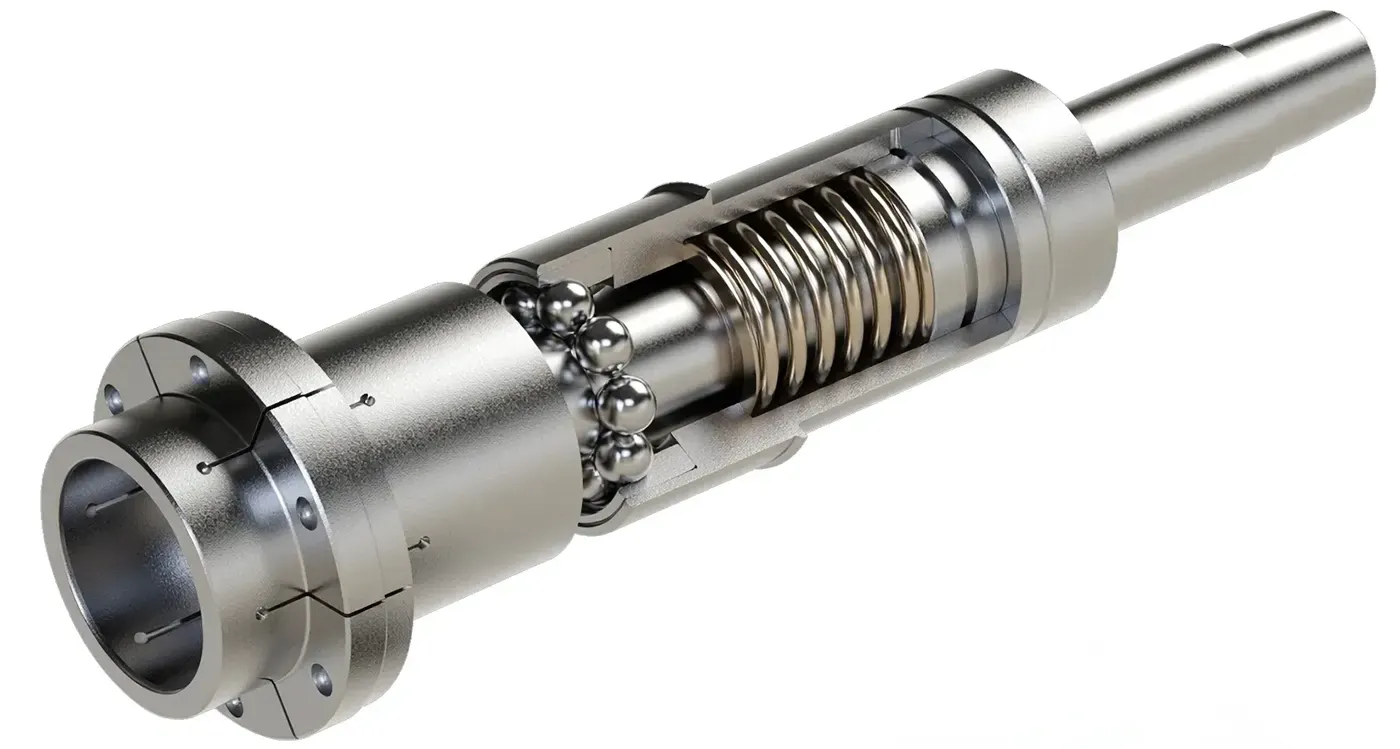
myonic develops ball bearings that meet precisely these requirements. A special nickel-based alloy combined with a precisely defined heat treatment ensures that the bearings:
- show virtually no deflection or torque in the magnetic field
- have mechanical properties that are very similar to those of classic steel ball bearings
- at the same time offer very high corrosion resistance
myonic bearings thus enable smooth, low-loss, and low-vibration operation even under the special conditions of MRI. They make a significant contribution to the accuracy and reliability of MRI-guided procedures and support the further development of modern, minimally invasive therapy concepts.
More information on materials, testing procedures, and areas of application for our non-magnetic bearings is available on request or in a personal consultation.